.png)
10 Best Smart Farming Technologies To Overcome Food Security
- hamdardkisancenter
- Sep 22, 2025
- 6 min read
Updated: Sep 29, 2025
Agriculture has long been the backbone of human civilization. However, today, it faces one of its most important challenges: ensuring food security. With the world’s population expected to reach nearly 10 billion by 2050, the demand for food is going to rise by more than 60%. Traditional farming methods alone cannot meet this rising demand. That’s where smart farming technologies come in.
Smart farming integrates IoT (Internet of Things), AI, robotics, drones, GPS, and automation to optimize agricultural practices, increase yields, and use resources efficiently. From IoT soil sensors that monitor crop health to AI-powered data analytics that predict diseases, these innovations are revolutionizing the agriculture sector.
In this blog, we’ll explore the 10 best smart farming technologies that are helping overcome food security challenges worldwide.
1. IoT Sensors for Smart Farming
IoT sensors are one of the most widely adopted smart farming technologies. These small, cost-effective devices can measure soil moisture, temperature, nutrient levels, and humidity in real-time.
Benefits of IoT Sensors
Precision irrigation – Ensures water is supplied only when and where needed.
Early disease detection – Tracks environmental conditions favorable to pests or diseases.
Resource efficiency – Reduces waste of fertilizers and water.
Data-driven farming – Helps farmers make informed decisions instantly.
For example, smart soil sensors can detect whether crops need watering and automatically send alerts to irrigation systems. This reduces water usage by up to 30% while maintaining crop health.
2. GPS Technology in Agriculture
The Global Positioning System (GPS) has completely transformed modern farming. Farmers now rely on GPS for mapping, tracking, and precision agriculture.
Applications of GPS in Smart Farming
Precision planting – Ensures seeds are planted at optimal distances.
Automated tractors – Follow GPS maps for efficient plowing and harvesting.
Field mapping – Provides accurate data on soil variations.
Yield monitoring – Tracks which areas of land are more productive.
With GPS-based systems, farmers can reduce overlaps in fieldwork, minimize fuel usage, and optimize time management.
3. Artificial Intelligence (AI) in Farming
AI in agriculture is not just a buzzword—it’s a necessity. AI algorithms analyze massive datasets collected from IoT sensors, drones, and satellites to provide actionable insights.
AI Applications
Predictive analytics – Forecasts crop yields and weather conditions.
Disease detection – AI can identify crop diseases from images in real-time.
Market predictions – Helps farmers decide when to sell crops for better profits.
Robotics guidance – AI assists robots in performing repetitive tasks like weeding.
By leveraging AI, farmers can maximize yields while minimizing inputs, ensuring sustainable food production.
4. Automation in Smart Farming
Automation is one of the fastest-growing areas of smart farming. From automated irrigation to self-driving tractors, automation reduces manual labor and enhances productivity.
Examples of Farming Automation
Automated irrigation systems – Adjust water flow based on soil moisture data.
Climate-controlled greenhouses – Automatically regulate temperature and humidity.
Harvesting machines – Robotic arms pick fruits and vegetables with precision.
Automated feed systems – Provide livestock with the right feed at the right time.
Automation saves time, lowers costs, and ensures consistent results—vital for food security.

5. Agricultural Robotics
Robotics is revolutionizing farming by performing tasks once considered impossible for machines. From planting to harvesting, agricultural robots bring efficiency and speed.
Popular Uses of Agricultural Robots
Harvesting robots – Pick fruits without damaging them.
Weeding robots – Use AI to identify and remove weeds without chemicals.
Planting robots – Place seeds accurately in fields or greenhouses.
Monitoring robots – Move across fields to collect real-time crop health data.
With robotics, farms can reduce dependency on seasonal labor and operate more sustainably.
6. Drones in Agriculture
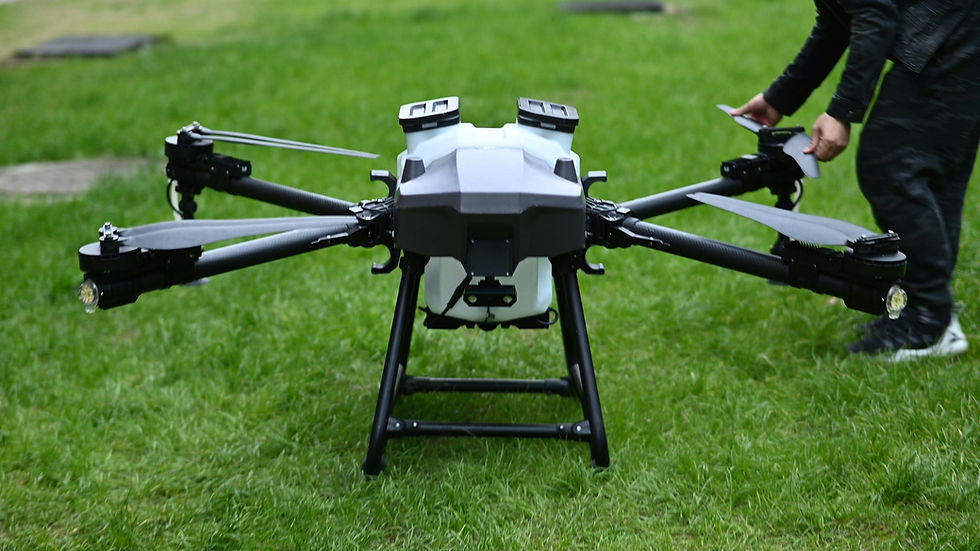
Agricultural drones are the most powerful smart farming tools. Equipped with cameras, sensors, and spraying mechanisms, they allow farmers to manage large areas efficiently.
Drone Applications
Crop monitoring – Capture aerial images to detect stressed crops.
Precision spraying – Apply fertilizers and pesticides exactly where needed.
Field mapping – Generate 3D maps of fields for better planning.
Disaster management – Assess flood or drought damage quickly.
Using drones, farmers can reduce pesticide use by up to 70% while improving crop productivity.
7. Hydroponics: Soil-Free Farming
Hydroponics is a smart farming technology that grows crops in nutrient-rich water solutions without soil. This method is especially effective in areas with poor soil quality.
Benefits of Hydroponics
High yields in small spaces – Perfect for urban farming.
Water efficiency – Uses up to 90% less water than traditional farming.
Pesticide-free crops – Controlled environments reduce the need for chemicals.
Year-round production – Indoor systems allow continuous farming.
Hydroponics is gaining popularity as a sustainable solution to food insecurity in cities.

8. Smart Irrigation Systems
Water scarcity is one of the major threats to global food security. Smart irrigation systems use IoT and AI to optimize water usage.
Features of Smart Irrigation
Automated scheduling – Irrigates based on crop needs and weather forecasts.
Moisture monitoring – Supplies water only when the soil is dry.
Mobile alerts – Farmers receive updates directly on smartphones.
Energy efficiency – Reduces pumping costs with optimized water flow.
By conserving water, smart irrigation not only helps farmers but also supports environmental sustainability.
9. Vertical Farming
Vertical farming involves growing crops in stacked layers under controlled conditions. It uses LED lighting, hydroponics, and AI to maximize yields.
Advantages of Vertical Farming
Space efficiency – Produces more food per square meter.
Climate resilience – Crops are unaffected by droughts or floods.
Reduced transportation costs – Farms can be built close to cities.
Sustainable production – Requires less land and fewer chemicals.
This technology is already being implemented in countries like Japan and Singapore to address urban food security.

10. Blockchain in Agriculture
Blockchain is emerging as a powerful tool of transparency in farming. It ensures food traceability from farm to table.
Blockchain Applications
Supply chain tracking – Consumers can trace food origins.
Smart contracts – Secure, automatic agreements between farmers and buyers.
Fraud prevention – Reduces counterfeit seeds and chemicals.
Market access – Farmers get fair prices by selling directly to consumers.
With blockchain, the entire agricultural system becomes more secure, transparent, and trustworthy.
How Smart Farming Technologies Overcome Food Security
Smart farming technologies tackle food insecurity in multiple ways:
Boosting crop yields through precision farming.
Conserving natural resources like water and soil.
Reducing post-harvest losses with better monitoring.
Sustainable farming practices that ensure long-term productivity.
Empowering farmers with data-driven decisions and fair markets.
Future of Smart Farming
The future of agriculture will be dominated by data-driven, automated, and sustainable farming systems. The integration of IoT, AI, and robotics will make farms more productive while reducing environmental impact. Governments and the private sector worldwide are investing heavily in smart farming to combat global food security challenges.
Conclusion
Smart farming technologies are the future of agriculture. From IoT sensors that monitor soil health to AI algorithms that predict crop diseases, each innovation brings us closer to overcoming the global food security challenge. By adopting automation, robotics, drones, hydroponics, and blockchain, farmers can not only increase yields but also ensure sustainability for future generations.
Food security is not just about producing more—it’s about producing smarter. And with these 10 best smart farming technologies, the world is well-equipped to face the challenge.
References
Food and Agriculture Organization of the United Nations (FAO). (2021). The State of Food Security and Nutrition in the World. https://www.fao.org
World Bank. (2020). Transforming Agriculture through Digital Technologies. https://www.worldbank.org
United Nations. (2019). World Population Prospects 2019: Highlights. https://population.un.org
International Food Policy Research Institute (IFPRI). (2020). Digital Technologies in Agriculture and Rural Areas. https://w
NASA. (2022). Precision Agriculture and Remote Sensing. https://earthdata.nasa.gov
Statista. (2023). Market size of smart agriculture worldwide from 2020 to 2030. https://www.statista.com
International Water Management Institute (IWMI). (2021). Smart Irrigation for Sustainable Agriculture. https://www.iwmi.cgiar.org
World Economic Forum (WEF). (2022). How Technology is Shaping the Future of Farming. https://www.weforum.org
FAQs on Smart Farming Technologies
Q1. What are smart farming technologies?
Smart farming technologies, including IoT sensors, AI, drones, robotics, GPS, automation, hydroponics, and blockchain systems, are designed to make farming efficient and sustainable.
Q2. Why is smart farming important for food security?
It increases crop yields, reduces resource wastage, and ensures sustainable food production to meet the growing global population’s needs.
Q3. How do drones help in farming?
Drones monitor crops, spray fertilizers, and create detailed field maps to improve precision farming.
Q4. Can small farmers use smart farming technologies?
Yes. Some affordable solutions, such as IoT sensors and mobile-based apps, are available for smallholder farmers.
Q5. What is the future of smart farming?
The future lies in AI-driven decision-making, fully automated farms, and sustainable methods like hydroponics and vertical farming.


Comments