.png)
AI Technology Is Awesome In Predicting Weather, Yields & Market Trends
- hamdardkisancenter
- Sep 24, 2025
- 4 min read
Updated: Sep 29, 2025
Agriculture is undergoing a digital revolution, and at the heart of this transformation is Artificial Intelligence (AI). For centuries, farmers have relied on intuition, traditional methods, and unpredictable weather patterns to grow food. But today, with growing populations, climate change, and rising food insecurity, conventional farming is no longer enough. AI technology in agriculture has emerged as a game-changer—helping predict weather, yields, and market trends while reducing risks and improving global food security.
In this blog, we will explore how AI empowers farmers through accurate forecasting, pest detection, crop analytics, and market predictions, and how these innovations can secure the future of food.
Why AI in Agriculture Matters for Food Security
According to the FAO (Food and Agriculture Organization), the world’s food production must increase by 70% by 2050 to feed nearly 10 billion people. At the same time, agriculture faces challenges such as:
Unpredictable weather patterns due to climate change
Water scarcity and soil degradation
Rising pest infestations and crop diseases
Volatile market prices affecting farmer profits
AI technology directly addresses these issues by analyzing big data, generating accurate insights, and enabling data-driven decisions. This not only increases farmer profitability but also ensures a reliable global food supply.
AI in Weather Forecasting for Agriculture
1. The Challenge of Unpredictable Weather
Unpredictable rainfall, droughts, floods, and temperature extremes disrupt farming schedules. Traditional weather forecasts often lack the precision needed at the local farm level.
2. AI-Powered Weather Forecasting
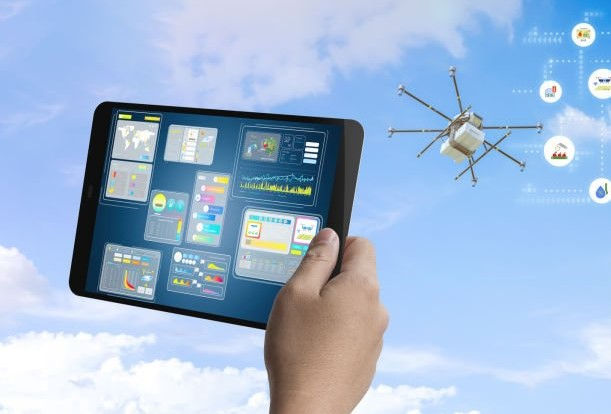
AI uses machine learning models, satellite imagery, IoT sensors, and climate data to predict weather at the micro-climate level. This means farmers can prepare for rainfall, frost, or drought days or even weeks in advance.
Benefits for Farmers
Improved planting and harvesting schedules
Better irrigation planning
Reduced crop losses from extreme weather
Increased resilience to climate change
Example: IBM’s The Weather Company provides AI-driven hyper-local forecasts to farmers worldwide, enabling more accurate irrigation and fertilizer use.
AI in Pest and Disease Detection
1. The Threat of Pests and Diseases
Pests destroy up to 40% of crops worldwide every year, costing billions in losses. Diseases such as wheat rust, late blight, and locust infestations severely affect yields and food security.

2. AI-Powered Pest Detection
AI systems use computer vision, drones, and smartphone apps to scan leaves, identify pest infestations, and suggest treatment methods. Machine learning algorithms can recognize early signs of disease before they spread.
Benefits
Early detection reduces crop damage
Minimizes chemical pesticide use
Saves costs for farmers
Promotes sustainable agriculture
Example: Microsoft’s AI Sowing App in India using machine learning and weather data to help farmers from pest outbreaks, increasing yield consistency.
AI in Crop Analytics and Yield Prediction
1. The Importance of Yield Prediction
Farmers, governments, and agribusinesses rely on accurate yield forecasts to make decisions about planting, storage, and distribution. Traditional yield predictions are often based on outdated models.

2. AI-Powered Crop Analytics
AI leverages satellite data, soil sensors, drones, and historical yield records to analyze crop growth. It can predict:
Soil fertility and water requirements
Growth patterns and stress levels
Expected harvest volume per acre
Benefits
Optimized fertilizer and irrigation use
Increased yield per hectare
Reduced waste and post-harvest losses
Better planning for food supply chains
Example: Ceres Imaging uses AI and aerial data to analyze field health, enabling precision agriculture and better yield outcomes.
AI in Market Trend Prediction
1. The Market Challenge
Farmers often face uncertainty in selling their produce. Prices fluctuate due to supply & demand imbalances, global trade issues, and seasonal cycles.
2. AI in Market Analytics
AI systems analyze historical price trends, demand forecasts, and global trade data to help farmers make informed marketing decisions.
Benefits
Farmers know the best time to sell crops
Reduces losses from market volatility
Provides access to fairer prices
Improves supply chain efficiency
Example: Agri-Digital uses AI and blockchain to give farmers real-time market insights and secure digital transactions.
Case Studies: AI in Agriculture in Action
Case Study 1: AI Weather Forecasting in Africa
In Kenya, AI-driven climate forecasting tools helped smallholder farmers adjust planting schedules.
Result: 23% increase in maize yields and reduced crop failures.
Case Study 2: AI Pest Detection in India
An AI-powered mobile app helped farmers detect cotton pests early, reducing pesticide usage by 30% while boosting yields.
Case Study 3: AI Yield Prediction in the U.S.
In California, vineyards used AI-powered drones for crop analytics. The result was a 20% higher grape yield with less water consumption.
How AI Helps Overcome Food Security Challenges
Reduces Crop Losses – Early detection of pests and diseases saves millions of tons of food.
Maximizes Resource Efficiency – AI ensures optimal use of water, fertilizers, and pesticides.
Increases Yields – Predictive analytics help farmers achieve more output from limited land.
Improves Market Access – Farmers gain fair prices and reduce post-harvest losses.
Enhances Climate Resilience – AI equips farmers to adapt to changing weather patterns.
Together, these solutions make farming profitable, sustainable, and secure—laying the foundation for global food security.
Challenges of AI Adoption in Agriculture
High Costs – AI tools, drones, and sensors are expensive for small farmers.
Lack of Technical Skills – Many farmers require training to use AI systems effectively.
Data Privacy Concerns – Farm data security and ownership issues need addressing.
Connectivity Gaps – Rural areas often lack internet and mobile infrastructure.
Government subsidies, farmer education, and affordable AI-as-a-service platforms can drive wider adoption.
The Future of AI in Agriculture
The future of farming will be AI-driven and data-centric. Innovations like autonomous tractors, AI-powered irrigation systems, and blockchain-integrated marketplaces will redefine agriculture. By 2035, AI is expected to play a critical role in feeding the world by making farming smarter, more efficient, and more sustainable.
Conclusion
AI technology is awesome in predicting weather, yields, and market trends—but its power goes far beyond that. From early pest detection to precision crop analytics and market forecasting, AI enables farmers to make smarter decisions, increase profits, and reduce risks. Most importantly, AI is shaping a future where food security is no longer a dream but a reality.
By embracing AI today, farmers, agribusinesses, and governments can ensure a resilient, sustainable, and food-secure world for tomorrow.


Comments